I rarely think about web design, UX, or content strategy when I’m knitting. In fact, I knit as a way to zone out and think about anything but work. But this weekend, while working on an owl hat, I was struck by the similarities between my knitting projects, and my web projects. My knitting serves as a good metaphor web design – and helps dispell a few myths.
It’s Gotta Be Perfect
When I find a new pattern, I often have to feel it out. Knitting patterns are often specific to a brand of yarn and a certain set of needles, so if I want to use yarn I already have, I need to learn the pattern well enough to be able to experiment. So I create a prototype.
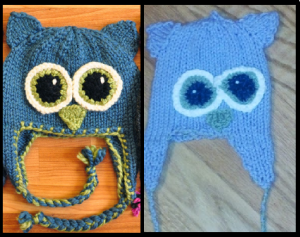
The first prototype isn’t quite what the pattern promised…
It’s common practice for web designers to go through multiple discussions with a client, create mockups filled with lorem ipsum, and then move on to creating a final product. But all too often, the final product has a few surprises in store for the client. Maybe the lorem ipsum didn’t quite reflect the way headers and help text will look. Or perhaps the sample pages just look different once they’re populated with real content.
Much like my knitting patterns, studying the instructions for a website or application isn’t enough. Prototyping, particularly early on in the project, will demonstrate the realities – both the flaws and the strengths of the application.
Changes Mean Expenses
It’s hard to admit when I’ve made a mistake, particularly in a project I’ve spent a lot of
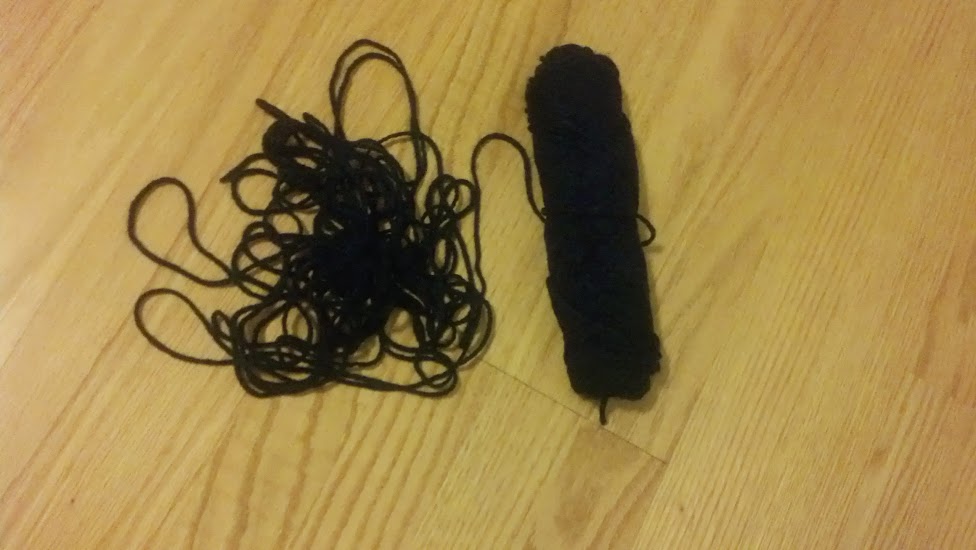
A waste of good yarn.
energy on. And when I do find that my sweater pattern is off-centered, or I’m running out of the right color of yarn, it’s easy to assume I ought to keep pushing along, and deal with the issues later. But if I finish the sweater and the “almost exact” reds don’t quite match, then reality sets in, and I have a pile of useless, expensive red yarn to show for it.
When a client has assumptions about the target audience, and one of those assumptions is wrong, it’s hard to admit. The usual response is to keep plugging away, because the audience is probably “close enough,” and besides, to begin new user research takes money and time.
But, like my sweater, the finished application will end up a pile of expensive red yarn. In the long run, it’s far more economical to unravel the sweater, or start the user research when the project is half-way through. It’s much better than hoping and wishing that a project on a weak foundation will magically come out strong.
Form or Function: It’s a Choice
Every so often, I find a particularly exciting pattern – something very lacy or especially challenging. Some of the most intricate patterns are likely to be impractical, because they’re not very warm, or just not useful. Yet when a lacy hat is complete, I’ve found that adding a thin fleece lining nicely sets off the lace, and also adds a warmth. Equally, using a thicker wool and bigger needles will make a fragile afghan stronger, while also amplifying the delicate look.
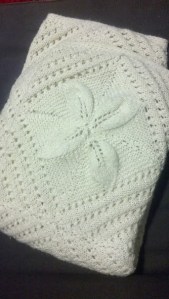
My grandmother taught me the benefit of combining delicacy and strength.
Web designers and clients alike struggle with the choice between beautiful visual design, and practical interaction design. As a content strategist, I also see clients choosing between flowery language and straight forward terminology. But, like with a hat or afghan, choosing an apropriate form can actually amplify its function.
If we know the audience well, then the best wording will both speak to the audience, and lead through the correct interactions. Equally, a truly beautful design should reinforce the functionality.
It’s All Design
Many UX professionals look for activities that don’t relate to their work, myself included. But it turns out, when you really love your work, design factors into everything. It just leaves me to wonder if my knitting is benefiting from my work, or if my work is benefitting from my knitting…

 Marli Mesibov: Content Strategist & Writer
What the strategies follow by a designer is mentioned in this article.Thanks for sharing.
Happy to share – glad it helped you!